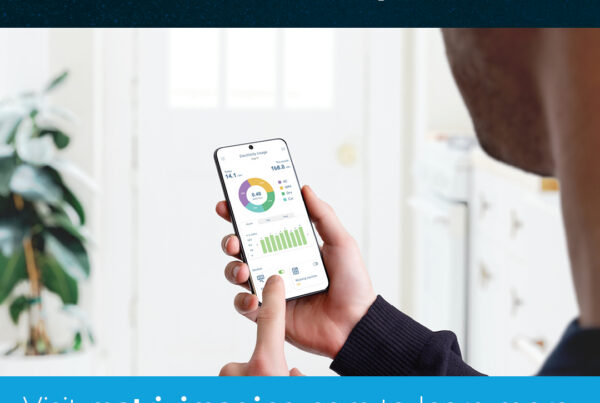
Digital self-service is often discussed as a customer convenience issue. That is true, but it is only part of the story.
For utilities, digital self-service is also a cost-control strategy. When customers can make payments, enroll in programs, update account information or find answers on their own, utilities can reduce pressure on higher-cost service channels.
The Cost Advantage of Digital Self-Service
The cost difference is significant. Walk-in service can cost $4-$8 per interaction. Call-center service can cost $3-$5 per interaction. Digital self-service can cost $0.25-$0.50 per interaction.¹ At utility scale, those differences add up quickly.
Even modest shifts toward digital self-service can reduce service costs and free customer service teams to focus on more complex issues. But adoption does not happen automatically. Customers need to know the tools exist, understand the benefit and receive clear instructions. Repeated reminders across the channels they already use can help move them from awareness to action.
Successful digital adoption efforts have shown meaningful benchmarks, including:
· 60%-80% digital payment adoption
· 30%-50% autopay enrollment
· 20%-40% reductions in walk-in and call-center requests¹
Technology Alone Does Not Drive Adoption
Those outcomes depend on more than technology. They depend on communication.
Many utilities already offer digital payment tools, portals, autopay options and alerts. But availability is not the same as adoption. Customers may overlook digital options if they are buried in a bill insert. They may miss them if they are mentioned once in an email. They may also hesitate if they are unsure how a program works or whether it is secure.
Customer discovery is changing too. People are increasingly using AI tools, social platforms, online communities and video posts to find information.² That means utilities cannot assume customers will naturally find the right page, portal or program on their own.
Communication Across Every Channel
The communication strategy needs to be coordinated. A bill can introduce a digital payment option. A mailed notice can explain how to enroll in autopay. An email can reinforce the benefit. A text alert can support timing. A portal message can help customers complete the action.
Print can support digital adoption. Digital can improve speed and convenience. Customer service teams can reinforce both. The most effective approach is not print or digital. It is print and digital working together.
Make the Next Step Clear
Channel choice still matters. Some customers prefer digital tools. Others rely on mailed communications. Some need additional support before they are comfortable making changes online. Encouraging digital adoption should not make customers feel unsupported. The goal is to make the next step clear.
At Matrix, we help utilities connect print and digital communication so customers receive clear, consistent messages across the touchpoints they already use. From billing and notices to digital prompts and customer education, coordinated communication can support adoption while reducing friction.
Digital self-service may begin with technology. But it grows through communication.
Are your print and digital communications helping customers take the next step? Matrix can help. Visit matriximaging.com to start the conversation.
Sources
1. Doxim, “Customer-Centric Payment Programs that Drive Digital Adoption,” April 2026. Presented by Scott Thomson, Director, Payment Solutions. Presented at IUCX 2026.